By "augmenting human intellect" we mean increasing the capability of a man to approach a complex problem situation, to gain comprehension to suit his particular needs, and to derive solutions to problems.
Everything is deeply intertwingled. In an important sense there are no "subjects" at all; there is only all knowledge, since the cross-connections among the myriad topics of this world simply cannot be divided up neatly.
The best way to predict the future is to invent it.
The document was built for one mind
Knowledge work runs on documents. The clay tablet, the printed page, the file, the folder, the shared doc, the wiki. Each one made a person more capable than they were without it, and each carried the same quiet assumption: one human author, producing every word at human speed.
The strain on that assumption is old. Douglas Engelbart saw it in 1962: "the complexity of his problems grows still faster, and the urgency with which solutions must be found becomes steadily greater." The demands on knowledge work keep climbing, and one author writing at human speed is a hard ceiling on how fast they can be met.
We believe that assumption held for 500 years because producing the work was expensive. The page was rationed by the cost of human writing, and that cost is collapsing toward zero.
We believe a container has to change when the thing it carries changes. The thing just changed.
The bottleneck moved
For most of computing, the hard part was making the work. Writing the spec. Drafting the doc. Filling the page. Every tool competed on how fast it let a person produce.
David Deutsch put the principle in one line: "The 'perspiration' phase can always be automated." The grind, the drafting, the getting ready to think, that is exactly the work a machine can take. The judgment about what to do with the result stays with you.
Then agents got good, and the grind collapsed. One engineer now points a swarm of agents at a problem and gets back more specs, plans, and code in an afternoon than a team used to ship in a month.
We believe production has stopped being the constraint. Human judgment is the constraint now.
We believe the scarce resource in every company is a person's attention: the time to read what the agents made, decide, and send them back out. Whoever builds for that scarce resource wins the decade.
The blank page is the wrong primitive
Open a blank doc and it tells you a story without a single word: you are the author, the file is the point, your job is to fill it.
Alan Kay taught that a medium is never just a container. Each one, he wrote, "serves as a medium (and constraint) of expression in which imagined structures can be embedded." The blank page is a medium built for one assumption, that you are the one writing, and that constraint stays invisible until it breaks.
Ted Nelson saw the deeper trouble in 1974. Knowledge, he wrote, is "deeply intertwingled": its "cross-connections ... simply cannot be divided up neatly." A blank, linear page fights the shape of knowledge itself.
We believe the workspace should start from a different premise. Your agent is the author, the file is a means, and your judgment is the point.
We believe the home screen should open on what needs you, not on empty storage. The question shifts from what you want to write to what your agents need you to decide.
The decision is the unit of value
When a thousand docs can be generated on demand, the doc itself gets cheap. The judgment that says this one is right stays scarce.
We believe the durable unit of work is the decision: what got approved, by whom, and against what standard. A doc is a snapshot. A decision is a permanent fact about your company.
Slack loses the decision when the thread scrolls. Git keeps the what but rarely the why. Most of the time the reasoning lives in one person's head and walks out when they leave.
We believe a company should hold its decisions the way it holds its code: versioned, attributed, searchable, and permanent.
Context is the scarce input
Models keep getting cheaper and stronger every month. Raw generation is on its way to free.
Friedrich Hayek named the thing that does not commoditize, back in 1945. The knowledge that decides outcomes, he argued, is local and situated: "the knowledge of the particular circumstances of time and place," which "never exists in concentrated or integrated form but solely as the dispersed bits of incomplete and frequently contradictory knowledge which all the separate individuals possess." Swap his central planner for a general model with no access to your company, and the argument lands the same.
We believe that as generation gets commoditized, the scarce input becomes trusted, organization-specific context: what your team has approved, rejected, and learned. The agent with the best context wins, and that context is something you own rather than something a model ships with.
We believe stronger models widen this gap. A sharper agent does more with good context, so the team that has captured the most pulls further ahead every quarter.
We believe context is the one moat that compounds. Models are rented by everyone. Context is owned by you.
Opinion is the moat
A blank canvas has no taste. It accepts anything and tells you nothing about whether it is any good.
That was a comfort when you wrote every word yourself. It becomes a liability the moment an agent drops 10 plausible drafts on your desk and asks which one ships.
We believe a workspace for this era has to be opinionated. It has to carry a definition of done, learn your standard, and tell you, in plain language, when the work is not there yet.
We believe the opinion is the product. Anyone can store your files. Almost nobody can hold your bar and enforce it for you, 100 times a day, across 100 agents.
What we're building
We are building Post Notion.
A workspace where you and your agents write the same pages, and your work is to consume, steer, and share what gets made, on any device, with nothing carried by hand.
Alan Kay predicted in 1972 that most of a personal computer's use would be "reflexive communication of the owner with himself ... much as paper and notebooks are currently used." Notion proved him right for a generation. The next medium is reflexive communication between you and your agents.
You read it, hear it, or watch it. You answer with a decision. The decision goes straight back to the agent. The page keeps itself current. The bar holds.
We believe this becomes the living brain of a company: the one place where agent work arrives, gets judged, and compounds into context that makes the next round sharper.
We welcome a world where the machines do the producing. David Deutsch reminds us that "problems are soluble," and that "an unproblematic state is a state without creative thought. Its other name is death." When production gets cheap, the work moves up: to judgment, to taste, to the next problem worth solving.
We believe the page is being rewritten in front of us, and the workspace has to be rewritten with it. If you see what we see, come build it with us.
Those who saw it first
The idea that a machine could think alongside a person, and amplify the mind that used it, is older than the personal computer. It is older than the internet.
A handful of people saw it with total clarity while everyone around them saw typewriters and adding machines. They were told it was a toy and a waste of a mainframe. They built it anyway.
We stand on their work, and we mean to earn a place in their line.

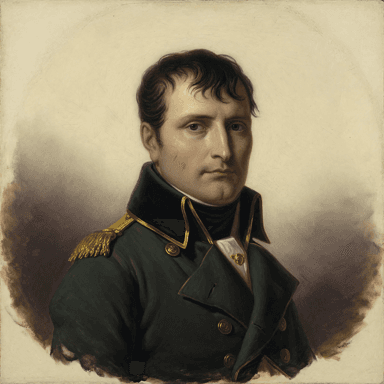
Douglas Engelbart1925-2013, who framed the computer as a vehicle for augmenting the human intellect, and in 1968 demoed the mouse, hypertext, and live collaborative editing in a single sitting.
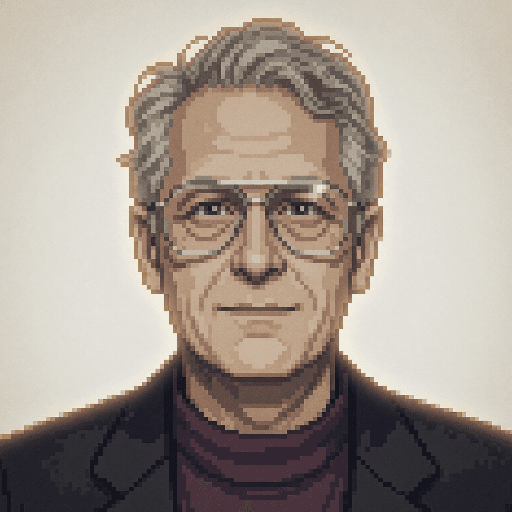
Ted Nelsonb. 1937, who coined hypertext and insisted that everything is deeply intertwingled, that knowledge is a web of links, long before the web existed.
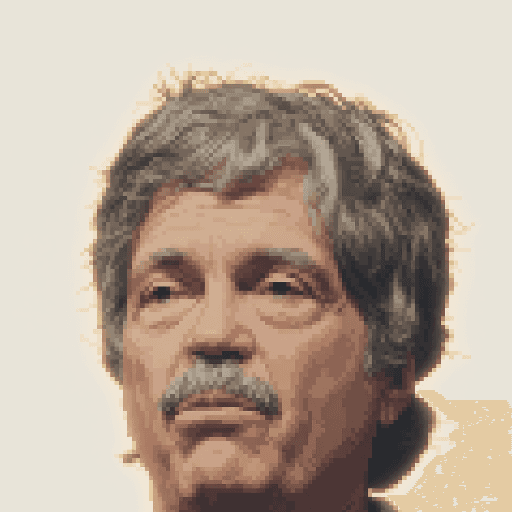
Alan Kayb. 1940, who imagined the computer as a personal medium for thought, the Dynabook, and taught the field that the best way to predict the future is to invent it.

Ivan Zhao, who turned tools for thought into software tens of millions of people actually use, by building Notion into a page you could shape like a document.